Derek sits down with Houston-based investor and capital raiser David Priest to unpack two decades of lessons: surviving the 2008 crash, shifting from transactional work to passive/commercial deals, why operator track record and conservative underwriting beat flashy pro formas, and how to protect yourself in today’s capital stacks (avoid bridge debt, prefer simple structures with LPs directly behind the bank). They also cover buying when others panic, the power of boots-on-the-ground, and a novel principal-protection approach for LPs.
—
Watch the episode here
Listen to the podcast here
Welcome to the Generations of Wealth podcast. I am your host, Derek Dombeck, and I’m pretty sure I said it last week. We have yet another unbelievable guest. I don’t know how we keep finding these people. It’s just remarkable. They just come to us. But Randy Legenderfer, he’s a syndicator. He’s a multifamily investor, built up his portfolio as a limited partner and then a general partner while working a full-time corporate job. And so we’re going to take that journey with him and see all the ups and downs and what he thinks is going to come in the future. So before we bring Randy on, just want to extend the invitation to everybody that’s listening.
You know, if there’s anything that I can do to help you, don’t hesitate to reach out. You can always find us at thegenerationsofwealth.com, derekdombeck.com. Shoot me an email, derek@globalgow.com. And, you know, my passion is creative deal structuring. If you’re stuck on a deal and you think there’s something there and you want help with that, reach out. So with that said, thanks for listening and let’s get on with our guests. and here he is Mr. Randy Legenderfer from Houston Texas I got the name right Randy I know I did I nailed it how are you doing sir first try to Derek man it’s uh it’s not too many people do that on the first try but I just want to thank you it’s a pleasure to be on your show and talk to your audience love talking about this stuff and uh just really appreciate being here I practiced your last name for three hours before we started recording. I was so nervous about screwing that up and maybe I’m lying, maybe I’m not. Nobody will ever know. So that’s true. Randy, why don’t you tell us a little bit about yourself, a little bit about your background and then yeah, I definitely want to get into your story because you’ve got a pretty cool story of building up your business while working a full-time job and that’s where most people are stuck.
So Randy Langenderfer for Houston, Texas, as you said. So I began my journey back in about 2009, 2001, the first recession, the global, the Great Recession, as it was referred to. I was working in corporate America for a private equity firm, Carlisle Company, a spin-off of Goodyear Tire and Rubber, if anybody’s familiar with Carlisle out there. And if you do, you know that’s a very cutthroat industry and a very cost-conscientious community. And I was desperately afraid during the global recession that I was going to be laid off. I was an executive that had a pretty good price tag on my head.
And so it was what I call an aha moment to say that I needed to find another income stream. And so, Derek, at that time, I really started looking at a lot of different things. I started looking at small businesses to buy, franchises, direct marketing companies, you name it, just trying to bridge something proactively. And landed in, a brother-in-law came to me who had learned to do house flipping, and he brought me online. We were hard money lenders. At the time, I was living in Cleveland, Ohio. And we were hard money lenders to a group out of Dade County, Miami, South Florida, flipping houses. and we did that for a couple of years and did very well. At the time, I said I had to find another job, and so I ended up coming to a large academic medical institution here in Houston, Texas, where I spent the last 10 years of my career, and I really delved in to multifamily. I attended a, for those of you who may know, one of the large educational arms, Lifestyles Unlimited here in Houston. I attended one of their seminars and I just fell in love with multifamily when I realized I could buy a multimillion dollar asset with non-recourse debt. And that’s really different than anything else, any other business that you can look at out there to buy or to build. The lender is not going to hold me accountable as long as I do all the right things. And so I really delved in and I started to, I joined Lifestyles and then I went to another group, the Sumrock Group out of Dallas for several years and learned the business, learned the underwrites, built a team, people of like-minded professionals, and did a couple of limited partnerships, investments, 2018, did my first general partnership deal. We bought a, that’s a story in and of itself, 139 unit flat roofs chiller boiler system in Beaumont, Texas, which everybody told me not to do. Oh, yeah, we’re coming back to that story for sure. Yeah, that’s a whole podcast in and of itself. But that was the first one. Ended up being successful. Fast forward to today. I’m a general partner in about 1,200 doors from Greensboro, South Carolina, to Tucson, Phoenix. I mean, Tucson, Houston, Dallas are the majority of properties. And I continue to invest in other people’s deals as well. So I’m a limited partner as well, Derek and other people’s deals. And so I left the corporate world in 23, the summer of 23, just about two years ago, to do this full time. And so today I’m still a syndicator. I’m a multifamily coach. I have a small coaching arm and doing some charity work. And I can truthfully say I’m enjoying life, Derek. I don’t have to work for the man anymore. I don’t have to fill out useless budget reports or performance evaluations or other reports that nobody reads. So I’m loving mine.
It just reminded me of the old movie Office Space with their TPS reports or something. I don’t remember what they were called, but if you remember that movie. So I do want to kind of dive in a little deeper on, you know, when you got into multifamily and you started investing as a passive investor to begin with, or were you a general partner to begin with? No, I started in 2014 in my first limited partnership. Okay. So the limited partner, you know, how did you vet those first couple deals? Or were you really leaning hard on the mentoring you were getting from those programs? Well, no, honestly, I didn’t vet them very well.
Because I did lean heavily on the mentorship groups that I was a part of at the time. However, real quick story. The first guy I ever invested with was a property that was owned by the city of Port Arthur, Texas, that had banned it. A developer got it, and they re-bought it and took it up to about 60% occupancy. We bought it, and we’re going to build the occupancy to 90%, refinance it, and hold it and sell it a couple years later. We did all that. We refinanced and took our money out. And then a fire, a flood, a fraud, perfect storm, property went real bad. But what I learned, the long answer to this question is the deal is made by the sponsorship. This guy put hundreds of thousands of dollars in the deal himself and made sure that all the LPs were made whole throughout the engagement. We didn’t make any money, but we didn’t lose any money. And the big, big lesson is it’s the sponsorship that makes the deal, not always the property. And so fast forward to today in your audience. You’ve heard it before probably elsewhere, but it is very true. I’d invest with that guy today anytime, anywhere because I know his character. And I can fast forward a day and say I’ve been in partnerships with other people that their character is quite the opposite. And you learn that as well, too.
Yeah, a previous guest on a show probably released in the last couple of weeks, we were talking about how it looks when the general partner has been through several market cycles. They’ve got more experience. They’re more conservative. They’re not as likely to make bold comments or predictions or just pie in the sky. type of stuff and and those are the types of syndications he really likes to go after um and i tell my coaching students i say i can guarantee one thing i’ll guarantee you won’t make the same mistakes i made you may make mistakes but not the ones i’ve made so yeah well and that’s what we talk about here on the show all the time right whether it’s myself or my guests we’re all teaching from the mistakes that we’ve made. And we can even tell everybody and we can shout it from the rooftops, don’t do this, we’ve made these mistakes. And a lot of people still think that’ll never happen to me. And lo and behold, sometimes it does. Right?
Well, and if somebody’s telling you as a potential investor, they haven’t had any bad times or they haven’t had any mistakes, run. Yes. Absolutely. Because if they haven’t, they’ve been in it for six weeks or otherwise they’re lying. Absolutely. So then moving forward, you know, you got your toes dipped in as a limited partner. And what was the leap to being a general partner? Was it just control or was it to make more profit? What was the goal there? Well, the goal really started out. So that was, I said, my journey started in eight or nine where hard money lenders. And then in 14, I bought the LP. And then I would say I legitimately got and still have the real estate bug, the fever. And so deal fever kind of set in with me. I mean, I saw this as an avenue to escape from the corporate world. And I really wanted to pursue that. And so I did. And, you know, got together with a couple of guys. As I said, did our first deal in 2018. I was fortunate enough, that’s the beautiful thing about teams and sponsorship teams. I didn’t have to do everything. I did become very active in that first one because I wanted to learn and grow the business. But you don’t have to do everything. So I say I own a little and a lot versus some people that want to own a quad or a tenplex and own it 100%. They own a lot and a little. Yeah. Neither one is bad, but just I didn’t want to work that hard, I guess.
So as you were raising money for these transactions, you know, some people want to get into the syndication business and try and raise money based off of their experience, meaning they’re not going to use their own money. They’re not going to put any of their own money into the deal. And I know you’ve raised a bunch of money. I’ve raised a bunch of money. You don’t know this about me, but I actually co-owned a hard money lending company for 10 years. And that was all syndicated money that we lent out. So I’m very familiar with that business. But compare the difference between being a general partner and bringing money to the deal versus being a general partner and only bringing your time and experience to the deal. Do you have stories about that?
Well, yes and no. I mean, I think you highlighted it well. There are sponsors. I mean, one of the first questions that every limited partner should ask a deal sponsor is, do you have money in this deal? And they will say most likely yes. And then your follow-up question will be, do you have any money in this deal beyond your acquisition fee? Because a lot of sponsors will take their acquisition fee for raising money and roll it as their contribution into the deal. That, to me, is not having your own money in the deal. it’s not a lie, but it’s also just semantics of making sure as an investor, you know. So I think a person, most of the time when people start, they have to put a lot of their own money into it. And I did too. Until you become more, have a more of a track record than some of the sponsorship grooms are just raising money and putting the deals together without any real hard money in it themselves. They may have had to put upfront money in, But if the deal closes, they’re going to get it all back. So that’s the other question is not only acquisition fee, but do you have at-risk capital beyond the reimbursed upfront fees for due diligence and loan applications and other things? But, I mean, look at it this way. Who do you want to invest with? Who do you want to invest with? Somebody that’s got skin in the game, real skin in the game, or that’s somebody that doesn’t. And very simply, I hope your audience sees that that’s, for me as a private investor today, that’s a deal breaker if they don’t truly have. Even some of the best people I know that got great track records are still putting money in it. And they should. I mentioned that came from the private equity world. And even the private equity partners for Carlisle were required to put their own money in the deals they were overseeing for that very reason. So if it’s good enough for the big boys, it’s good enough for you and me.
So to play devil’s advocate, Randy, if somebody came to you and said, Randy, I want you to coach me. And I’ve got connections. I’ve got experience in real estate. I’ve got all these things, but I don’t have money to put into the deals. How do you advise that student? There’s a lot of people that I call long on energy, short on capital. And there’s a lot of students out there that way. They’re really long on energy and will work day and night, but they’ve got a little capital. I mean, the easiest way I try to coach those people is to form your own team. You don’t have to have the money, but you need to have a partner that does. So find the capital partner that is willing to come along with you and share the same vision and cut them in on a deal. You may have to take less of the deal percentage wise, but who cares as long as you’re building a track record for yourself. And those are the various ecosystems, my ecosystem. There are others out there, large groups that you can do that from. But multifamily is not a no money down game. It’s a capital intensive game. And doing it that way too, you’re going to build friends and team members. As we say, multifamily is a team sport. You can’t do it even if you’re doing a 10-plex and a 20-plex. Sooner or later, you’re going to run out of your own money. You’re going to need other people’s money. So start building a team early. And find somebody, Rod Khalif did this great partnership analysis, find somebody with skill sets opposite of yourself. I mean, marriages are made based upon opposites attract and partnerships should as well. Because as he once said, he coined the phrase, you know, a partnership is like a marriage. They’re easy to get into, but expensive and costly to get expensive and emotionally hurtful to get out of.
Yeah, absolutely. And I will say, you know, I’ve talked about all the ups and downs that I have in my life pretty publicly. But, you know, the reason I got out of the hard money lending business wasn’t that I didn’t like my partner. But we all of a sudden, not all of a sudden, over time, we had different visions for where we wanted to go with our businesses. And, you know, that’s the same thing when you’re getting into a team or partnership or whatever. My advice is always to people, you know, go in as if you are getting married. It’s not a one-night stand. It’s not just until we get sick of each other. But then also have an exit plan so that you can exit amicably and it’s all drawn out up front. Because I see that quite often with these syndications or just business partnerships. And I know one guy, I’ll never name his name publicly, but he jumps into partnerships you know with a handshake at the blink of an eye and you know at the end of the day you’ve got hundreds of thousands if not millions of dollars of assets with somebody and no exit plan so in the future it may not even be something that either him or his partner want it could be a death an illness a divorce and all these other things that affect it that can take them down and i i see people do this all the time, Randy. It drives me nuts. Well, and you’re profound in your advice there to your listening audience. That is very profound. So can’t agree more. Yeah. So let’s talk a little bit about some of the tax advantages and or disadvantages to investing, whether passively or as a GP. What does that look like? Well, yeah. So for the person getting started, I mean,
And one of the three reasons you invest in multifamily or commercial real estate is right to cash flow, favorable tax treatment and forced depreciation. And that favorable tax treatment is you get to the concept of depreciation. So the asset is depreciated over a useful life. And in the Trump era, we got to write stuff off a lot faster. And we’re hoping those, whether you like them or not, that we hope those 2017 cuts get put permanently into the tax code. But, yeah, it gives the investor the opportunity to have a paper loss each and every year on their tax return while having a positive cash flow. And if you have other investments, there’s three major buckets in your tax return. There’s ordinary income, there’s passive, and there’s capital silos in your tax return. So your real estate sits in that passive one. You can’t write off the losses unless you’re a real estate professional, which is a tax IRS designation. But you can offset the gains. I coach people that the idea really is to develop a portfolio of assets so that when one sells, the gain from it is being offset effectively tax-free by the losses in your other property. And it’s a beautiful thing. I always say I want to pay the government my fair share of taxes as long as my fair share is as little as legally possible.
I’ve talked immensely with my tax professional, and they know that the strategy is defer, defer, defer, die. Yep. Absolutely. Give the heirs a step up in basis. Yep. And, you know, it’s proven a lot of people well over the years, generations. So, and I know this is going to be, the answer is going to be, it depends. But structuring a syndication, can the limited partners get the same depreciation as the general partners? Is that all negotiable? How would you structure that if the deal was your deal? So that goes to the capital stack, right? And I think there are many different models out there. I say you’ve seen one, you’ve seen one, but most of the big box educators probably coach on a 70-30 equity split. So 70% to the limited partners, 30% to the general partners, and they’ll have some other kind of prep return in there. The other popular model is what I call the simple stack. That’s 80% to the limited partners, 20% to the general partners. So from a tax basis, generally speaking, your depreciation and your losses are allocated against both groups, the limited partners and the general partners. And so there’s advantages to both parties there. It just depends on whether you like an 80-20 model where you get a higher percentage or the 70-30 model where you get a little bit lower percentage of ownership, but you get a preferential return, generally speaking. And so that preferential return isn’t a guarantee. It’s just a priority of payout. So whenever dollars are paid out under the 70-30 capital stack, I’d say it’s 8% PREF. The PREF returns are going to get paid first, and they get paid before the general partners ever get paid. In the simple 80-20 model, as you know, if there’s a dollar paid out, 80% of it goes to the general partnership, and 20% of it goes to the limited partnership, and 20% goes to the general partnership. I don’t know about you, Derek. I’ve never really run the math as to which deal is better because I’ve seen them both a lot. I prefer the 80-20 just for simplicity purposes.
I know from the bookkeeping standpoint of the syndications that I was involved in when we were running just the lending business, we used to have a fund that we paid out a prep, and then we split anything over above that prep. And it was such a pain just to keep the books. So the next fund we put together, it was just a flat return, made it so much simpler. People were generally happier. We were happier. And I like keeping it simple. That’s just my model across the board. Well, the pros for the limited partner investor are that under the 70-30 with the PREP is, you know, what the sponsorship will sell is that we’re not getting paid until you get paid. Right. So that’s the sales pitch on that model. Now, the downside of that is, I would say, as a limited partner, I want my general partners to get paid. I’m a limited partner in a deal. I want them to get paid. And the downside of that model is if deals start to struggle, the general partnership can take their eye off the ball because they’re not making any money. So you want to, in my mind, you want to keep them incentivized to stay in the game and work through the deal so they get paid as well. And that’s the advantage of the 80-20 model. Any dollar that goes out is split 80-20.
Yeah. I agree with that. I think that’s the methodology that I would prefer as well. Because if the deal is starting to go sideways and that general partner is off looking for greener pastures, because they’ve got to keep the lights on, you’re 100% right. They can just, I won’t say they can walk, but they can definitely change their agenda. Let’s talk about some of the deals. There’s a lot of examples of that today, too, I can say. I’m sure you’ve seen them, too, Derek. There’s a lot of examples of that today. And that’s where I was going to go next, is not necessarily with your deals, but just in what you’ve seen over the last 10, 11 years. You know, we’ve seen cap rates go, you know, low to high. Interest rates, obviously, a lot of syndications going belly up because they were done incorrectly, probably from day one. What are you seeing? What have you experienced? And then what do you see for the coming months or years in the commercial residential space?
Well, I was blessed to get started in this, like I said, in the early 20s, 2010 to 2020, what you call the glory years of multifamily. I refer to as, you know, rising tide lifts all ships. You didn’t have to necessarily be smart. You just had to be in the game when you were making money because rising tide does lift all ships. You know, looking forward, I was just talking to a gentleman today. There is an estimated $2.7 trillion, trillion with a T, dollars of loans coming due in the next 12 to 36 months that are underwater. Yeah. So just think of that 2.7 trillion. Even if it’s half of that, that’s an enormous amount of assets that are going to be coming up because they’re underwater. So I think the reality is, is I got in some deals, but I’ve been in some before and some after. If you got in a deal in 2021 or 22, you bought an unbearable rate debt. And because that’s the only deals we’re getting done. And if you did, you know, nobody, at least I couldn’t have. I don’t know how many did that could have projected a 5.5% increase in interest rates. And so those deals are just, they mathematically don’t work or they’re extremely challenging to refinance today. And therein lies the problem. So I used to say when I got started that if somebody had a property that had defaulted or given it back to the bank, that was a red flag and don’t ever invest with them. But I can think of three really good multifamily operators right off the top of my head. I won’t name them. Very good operators, but have lost a property in the last 12 to 24 months because of what I just said. So the idea for your limited partners out there listening is just do your due diligence. If somebody tells you they got a perfect track record, just talk to them. When’s the last time they bought a deal? You bought one in 2021 or 22 and they can, and they’re surviving it. Then kudos. They did very well. So I’ve got one that’s doing well and one that’s not doing so well.
You know, there’s, there’s the syndicators or the syndication of private money that’s going to get wiped out. A lot of these deals, the banks are still going to be okay because they’re at 60 to 70% LTV. Right. So that’s kind of the point, like, again, my experience when I was raising money and syndicating, we didn’t, I traditionally don’t use institutional financing. In my business currently, I don’t. And I haven’t in a really, really long time. I like dealing with people. I don’t like dealing with institutions. However, I’m not buying, you know, 200-unit apartment complexes. So that is different. But one of my pet peeves is that, you know, people do get in with bridge loans or, you know, variable rate debt, and they’re putting private people in second position or even third, fourth position, knowing that there’s a lot of risk there. I mean, that bridge loan or that five-year call provision in that commercial note or seven-year call provision, that goes by in the blink of an eye. And they don’t have plan B or C. I don’t know where your thoughts go with that.
But I think you’re spot on. I would say, though, back to that 2010 to 2020, 14 to 20, I can tell you I did as a limited and as a general. I did mention that first deal I did. We turned it over in 21 months and doubled the investor’s money, even with all the operational challenges we had. I was averaging 130% return in that time period. So as an investor, every dollar I invested, I got $2 back, $2.30 back. And I’d take that all day and every day. It hasn’t been that affluent since then, since 2021. But there’s still some really good deals out there. And I think it just goes back to different market cycles. And to me, you got it, whatever, you know, single family, multifamily. And single family went through the same stuff multifamily going through in the early 2000s. Right. And single family did that same stuff then. The bank’s gotten all kinds of trouble with that. But my point of it is, is to your audience, is you got to stay in the game. Okay, you can exit if you want. But you’ve got to stay in the game and persistence and learning from mistakes of others and due diligence. Still over the long period, I mean, look at the big board. Donald Trump, again, what did he like? I mean, he almost declared bankruptcy two or three times. Yeah. I mean, it’s Trump Plaza in New Jersey or whatever it was and ended up coming out of that, you know, winning like a bandit. So you’ve got to stay in the game and learn how to survive and learn to swing another day.
Well, that’s the fun part. When you have been in this through several market cycles, it’s like you know the end of the movie. So, I mean, I got my butt kicked in 07, 08, 09. My audience knows all those stories. And it was brutal. But now I have a tendency to see other opportunities that most people don’t know. And they’re in front of us every day. There’s opportunity every day if you know what to look for. And then when you see it, to actually take action. And to me, I love a down market. I love a declining market. There’s opportunity in any market, but there’s the thinning of the herd. I use that term on the show fairly often. And that’s what capitalism is all about, right? So all of the realtors that come on, all of the extra mortgage brokers, bankers, appraisers, everything when there’s up markets, booming markets, they all start to starve when the markets shift. And those are opportunities. And it’s the same thing in commercial right now. There are going to be a lot of people that lose a lot of money. And there’s going to be a smaller fraction of people that are going to do very, very, very well.
You summed it up very well. I mentioned the call I was on earlier today with $2.7 trillion. That’s exactly what this guy was pitching was a fund to go out and buy distressed properties. He has, just like in the 07, 8, 9 with the single families, those people who have relationships with banks get the REOs at 60 or 70 cents on the dollar. did extremely well. And today in the multifamily, it’s the same way. I don’t have a relationship with those big bank, those big commercial lenders. This gentleman does. And if you can get commercial properties that 60, 70, even 80% on the dollar and ride it out for a couple of years, you’re right. There’s going to be tremendous upside. It won’t be for the faint at heart and it won’t be for the person who has no capital but those deals are going to be out there. It’s a matter of networking just like it was in the early 2000s on single family with the banks and finding those deals.
Yeah, and what most people don’t know, and I’ve interviewed a few people in the lending business on my show, but we never got into the regulatory side, the back end of the banking industry. And I’ve studied it years ago, primarily when it was the residential crash. But, you know, these banks, they can’t sit on these non-performing assets. Their money is tied up and they’ve got their credit report just like we all have our credit report. And they’re far better off to cut and run and liquidate and redeploy that money into good loans than they are to try and, you know, squeak every dime they can. I’m having that conversation with a lender right now. We’re trying to prove to him, to them, I should say, that the best course of action for your bondholders, the lender’s bondholders, is to just cut the interest rate for us and let us operate it for a couple more years and wait out the market. And to your point, the lender is saying, I don’t think so. We’re not new for something.
Your relationship at that bank likely wants to do that for you, but their regulators behind the scenes are saying, oh no, absolutely not. They got a loan committee, or I call it the man behind the curtain, man or woman or people behind the curtain. You’re never talking to the person who’s making the decisions. You’re talking to somebody that’s following a checklist of items to be done. And that goes back to why I don’t like dealing with institutions. Quite frankly, that is what took me down in 07 and 08 because everything I had was institutional debt. And there was nobody to talk to. There was, you know, the relationships I had, they were escorted out of the door when the bank shut down or got bought out for the third time. Right. So I’ve since then built a business around private capital where not if, but when there’s a challenge, because there will be challenges.
Right. phone call to hey Bob hey Jim hey Susie whoever it is this is what’s going on this is how we’re going to solve it and they’re along for the ride and they they’re made whole right versus what you just said the man behind the curtain the wizard of Oz who’s pulling the handles you don’t know they may be sitting in New York LA Chicago who knows they may be sitting in China quite frankly Maybe he’s in the time of doing that. Yeah. So, well, yeah, I think we’re very much on the same page with that conversation, Randy. You know, as I kind of start to wind this up, I do love asking this question because I put a lot of thought into it ahead of time. Okay.
What is one question I should have asked you that I didn’t? What’s a one question you should have asked me that I didn’t? I spent just as much time thinking of that question as I did practicing your last name. That’s a good one. Three hours, right? Or zero, but either way. I think the only question I would say is kind of what’s your why and all this. I mean, I’m probably older than you are. I left the corporate world and I’m doing this, but no. Randy, what’s your why? Why are you doing this? I’m at the point I could retire from life and go out and play golf, but my why is very simple. One, I want to keep active. I’ve seen too many people retire and just dwindle away intellectually and physically, and so I want to stay active. I have a long list of charities I want to promote and give away much of my wealth at the end of my day. And it’s back to that broader question of giving back. So I said I started an educational arm. And if people want to talk about that, how to buy multifamily properties, because there’s been a lot of people built into my journey along the way. Many mentors I can think of that have built into me along the way. And I’d like to be helping somebody else going forward. So that’s a couple of the whys. Yeah, the money doesn’t hurt, but that’s really not the primary motivator.
I think, correct me if I’m wrong, most people that I like to be around and associate with are people that don’t do what we do for the money. Even if it started out that way, like you were money motivated, those business owners typically don’t last because it’s not enough of a why to keep going. And that’s why I love putting on this show and talking with people like yourself. It’s that, the love of the game more than the love of making money that keeps us going.
And you find the people that are in it for the money, I think, are maybe just a poor stereotype, but extremely self-oriented. And are the people that you have to be extremely careful when you are doing a deal because they’re only in it for themselves. You know, I take, like I’m sure you do, you have private lenders. I take extremely responsibility when I ask other people for their money to put into deals. And so I just, I consider that, you know, it’s a personal thing. They invest because they know me or build a relationship with me, not because of the deal, it’s because they know me. And so that’s a relationship that I really try to work hard at and don’t want to injure. So that’s another difference. the person who’s going to just make money is only worried about their GP share.
A hundred percent. And it’s the same thing with that. When we were talking about 80-20 versus 70-30, the person that’s only in it for them, they will take their eye off of that ball and start looking for the new shiny object if it starts going down. The person that’s got the right ethics and morals, they’re going to go down with the ship and do everything they possibly can to make it whole. And those are the people I want to be around. Definitely. Well, Randy, you did really well with that question that I thought of for hours. I appreciate that and appreciate your time and just telling us your viewpoints and your story.
Well, Derek, I just want to thank you again. It’s really been a privilege to spend some time with you and your audience. Let’s do it again in six months or a year and see where each other’s at. Absolutely. Well, to the rest of you listening, thanks for being here. If you’re a regular follower, you just found us. Thanks for finding us. And, you know, until the next show, next week, go out there and share this with anybody you think this can help. And help spread the message throughout all your network and social media. And go out there and do some deals. See you next time.
Important Links:
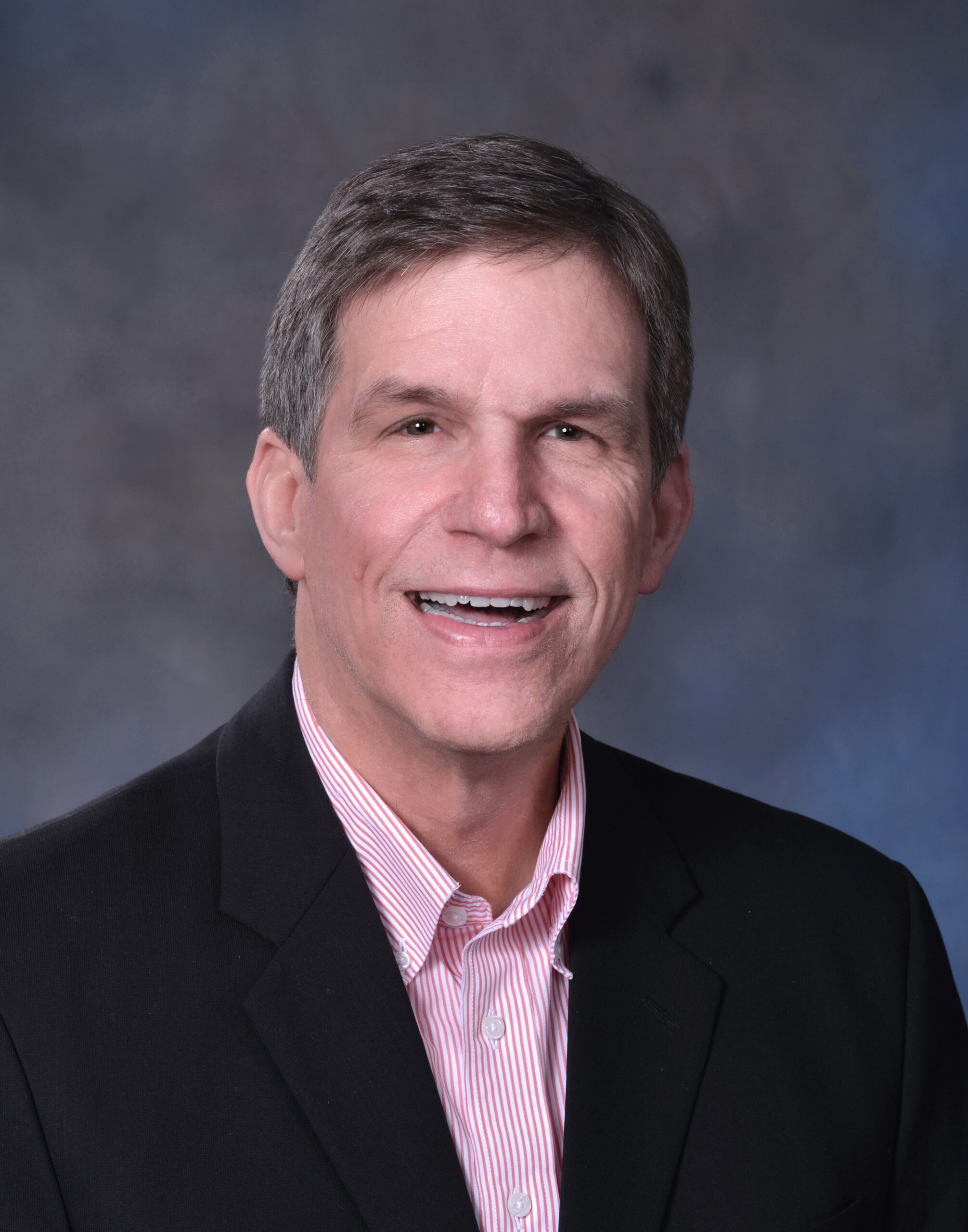
About Randy Langenderfer
Randy is president of InvestArk Properties and is a general partner in 1,300 doors, representing roughly $200M in assets under management. He founded 𝐈𝐧𝐯𝐞𝐬𝐭𝐀𝐫𝐤 to identify the best investment opportunities that contain the least amount of risk and currently has a portfolio of nearly 4,000 units providing exceptional returns. InvestArk is passionate about helping others achieve their goals in real estate.
He has invested in a total of over 4,000 units in TX, OK, OH, and LA. InvestArk’s investment philosophy is to create value by delivering superior risk-adjusted returns through diligent sourcing, selection, and execution of the business plan. Randy has an MBA and is a Certified Public Accountant and earned his B.B.A. in Accounting and Information Systems from Bowling Green State University.
Randy is also a board member, corporate strategist, financial expert, and risk, compliance, and cybersecurity executive with cross-industry and cross-functional experience and the ability to effectively drive business results. He currently serves as an independent director, chairman of the Audit Committee, and as a member of the Finance and Board for Summa Health System. Randy also offers a coaching and mentoring program to help others in their pursuit of acquiring and investing in multi-family properties.