Derek sits down with investor and podcaster Dustin Heiner to unpack how he went from a government IT job to becoming “successfully unemployed.” Dustin shares the layoff story that sparked his pivot, why he invests strictly for monthly cash flow (not appreciation), and his “build the business first, then buy inventory” framework. They dive into systems, out-of-state teams, market cycles (including the short-term rental glut), and creative deals—plus Derek’s zero-interest win and a live subject-to opportunity that emerged from a tenant call.
—
Watch the episode here
Listen to the podcast here
Welcome to the Generations of Wealth Podcast. I am your host, Derek Dombeck. Today, yet again, we found an incredible guest. I know you’re shocked, but you shouldn’t be. So before I bring Dustin on, we have some work to do, right? I have to always thank you for being here. And if you just found us, welcome. If you come back week after week, thanks again. And, you know, I really want to be putting myself out there to help you guys. So if there’s anything that you need help with, you know, reach out, go to DerekDombeck.com, TheGenerationsOfWealth.com, shoot me an email, Derek at GlobalGOW.com. Or, you know, if you need help with deals, that’s something that I really love doing. You’re going to hear on today’s show, Dustin and myself are going to be talking about deals and passive income and building up your portfolio. But if you’ve got a deal and you’re stuck with it and you know there’s something there, but you can’t structure it, reach out to me and let me help you. So all that said, let’s get on to the show. And here is our incredible guest. And all the way from Nashville, Tennessee, Mr. Dustin Heiner. Thank you so much for being on the Generation of the Wealth show. How are you doing, sir?
What’s up, Derek? Hey, thank you so much for having me on the show. Yeah, I personally love talking about generational wealth. I have a generation of wealth myself, and I love learning about how other people do it. But so, yeah, I invest in real estate and became successfully unemployed, which means, you know, retired early. And then I go to the gym, hang out with my family, come on podcasts and talk to great people like you because I don’t have to work a job. I got 40 plus hours of my life back. But thank you so much for having me on the show.
Well, I always appreciate anybody that’s giving us their time, whether you’ve got time or not. It’s awesome. We all want to get there. We all want to get to the point of having more free time. That’s the goal. But part of our show is living your vision and loving your life. And I know you’re just from a few things we talked about before we started recording. It sounds like you’re well on the track to do that. But why don’t we just kind of start a little bit at the beginning, who you are, where you’re from, what your background was, and then we’ll dig in a lot deeper.
Yeah. So I didn’t start being a real estate investor. I started just like everybody starts. You know, you go to school, get good grades. But this is the plan that other people tell us. Get good grades and you go to school or university, you know, college and get thousands of dollars in debt and get a quote unquote career. And so I did that exact same thing. In fact, I get a super stable, the most stable, secure job you could ever think of. I started working for a local county government in California doing IT. So that’s definitely very secure. But at the same time, I started investing in real estate. So I’ll fast forward. So now I have 30-plus single-family homes, everything from midterm, long-term, short-term. I have 775 apartment units to large apartment complexes. Bought those as well, invest in some hotels. And all of that as a means for me to create generational wealth. So first, to become financially independent. Wanted to make sure I didn’t work for somebody else and become successful and employed. Because I think when you’re working a job, it’s a J-O-B. You’re working just over broke. And so needed to get out of that. So I now have so much cash flow coming in every single month that that’s what I feed my family. And that’s where I’m at now is I just keep scaling and keep growing so that I can then give it to my kids and generational wealth. Perfect.
Perfect. Now, I know that you started a couple decades ago almost, as did I, which is weird because we both still look 29. Perfect. But, you know, I love talking to people that have been through different market cycles. And you started at a time where the markets were just starting to peak and then crash. I started three years prior to that. So I built up a portfolio and then got my ass kicked in the crash. So I’d love to jam a little bit about how that worked out for you versus me because I know it worked out better for you than it did for me.
Well, let me walk you through a quick story of how I really got into this because, remember, I started doing a regular sit-down desk job, you know, following the path that everybody tells or tells us to do. And so I’ll walk you through a quick story and then that’ll show you how I was able, honestly, in 2008, I made more money, which I was amazed. I was like, I thought I was going to go bankrupt and broke. So just like following that same path that I just originally mentioned a minute ago that you go to school, get good grades, and you go to college and get thousands of dollars in a debt and get a career, which is what I did. And so I started in my career and I’ve also had other couple other businesses, smaller businesses, but I bought one rental property in 2006. And that started making me cash flow every single month because my goal initially was like, I want to make money for my properties. Like I want to not work for somebody else. So I bought one or two properties and started making some cash flow, which was so good. I was so excited. But you know what happens, you know, as life starts getting in the way, my wife and I started having kids. we had one two three four kids and this is really what shoved me to be all in in real estate investing and get rid of the job so when my wife was pregnant with her fourth child she goes into delivery and then i go on fraternity leave from my job you know that’s where the dad stays home with the mom changes poopy diapers and all that good stuff bonds with the baby well i’m off work for about two weeks and then i get back to work and in that same week that i get back to work i get a call from my boss’s boss’s boss’s secretary like a top dog she says dustin would you please come to the office and i said sure and i hung up the phone i paused for a second i thought why are they calling me the office like this isn’t normal i’ve seen plenty of movies friday at 3 30 is not a good sign so i started thinking oh my goodness i might lose my job but there were some rumors or some rumbling going on in the county before i went on paternity leave that there could potentially be layoffs because this was like 2009 10 like just depression was really hitting and i immediately shook it off. I said, there’s no way. I’ve got so much seniority here. My bosses think I do a great job. So I get up after shaking it up. I’m going to go walking to my boss’s office. Well, his or this hallway to my boss’s office isn’t very long. In fact, it’s kind of short. But every single step I took, it felt like the hallway got longer and longer and longer. And it felt like my feet became lead bricks because the weight of potentially losing my job was starting to crush down on me. Well, I get down the hallway and I turn the corner and I see my boss’s door. His door is closed and I secretary, they’re a super sweet, nice old lady. And she says, Dustin, would you please have a seat? And she’s kind of sheepishly grinning at me, trying to console me with her eyes because she knows everything about what’s going on. I know nothing about what’s going on. So I go and I take my seat. And as I sit there, I start thinking about my life. I started thinking this entire plan that we’re all told, if I lose my job right now, did I just waste my life following this plan? And then And I realized, oh my goodness, we just had our fourth child. If I can’t feed my family, does that make me a failure as a father? Does that make me a failure as a husband, as a man trying to provide for his family? Well, as I’m sitting there, my hands get all clammy.
My forehead gets all sweaty because the nerves are just crushing me. Then the door in my boss’s office opens up. And out walks a coworker of mine with a piece of paper in her hands. She’s noticeably distraught, very upset. She’s not necessarily crying, but you can tell her world has been rocked. She passes by me and my boss says, Dustin, would you please come to the office? So I get up and I go into his office and I get laid off. And remember, this is the government. Nobody gets fired or laid off from the government, but I did. So I take that layoff notice and I go back to my desk and I realize two things sitting there. And this is the reason why I tell the story. So the first thing I realized, I need to be able to provide for my family. So I need to get another job. Really blessed. Praise the Lord to find another job in the same county, a different department. wasn’t having his issues. So check, got that done. Then sitting in that chair, I realized the second thing. I need to make sure that this never ever happens to me again. I need to make sure that nobody can take away my ability to feed my family. So right then and there, I realized I needed to be an investor, but life got in the way. I said, no longer will life ever get in the way. So right then and there, I started telling every single person that I met that I am an investor. Now it may so happen that all of my money came from my job. That’s now my part-time job. I’m a full-time So fast forward to the story. Started buying property after property after property, each one making me $300, $400, $500 a month in passive income. That’s why in the crash, I made more money because rents went up because sadly people needed a place to rent. I made more money. So last part of the story, I went to my boss, a new boss, worked there for a couple of years. And I said, boss, I’m laying you off, you know, jokingly. And he says, Dustin, what are you going to do? I don’t have to do anything. I own real estate that makes me money without even working. So last quick part of the story, after I talked to him, I walked to my car. So I’ve taken this walk a thousand times to and from. I was in downtown about a mile and a half walk every single day each way. Well, I felt like I was walking on clouds because I knew I would never, ever need a job again. Because after 30 plus properties, each one making me three, four, $500 a month or more. I still own them. I make even more money now. I’ll never need to work again. And so for you listening to us, I want you to realize something that I realized. that’s why I tell the story, is that you are worth so much more than anybody could ever pay you. Your boss is not paying what you’re worth. And you’ll notice easily by your boss is paying you just enough to keep you working without quitting, but not so much money that takes money out of their pocket. If they paid you what you were worth, you go broke. So instead, finding a way to make your value that you put out into the world that makes you money every single month in cash flow. and I do it through real estate. And now with 40 plus years of my life back and also 40 plus hours of my life back every single week, I build businesses. I build businesses that help me to buy more real estate. I buy more real estate that gives me more time to build more businesses and keep going. And then now I will literally pass all these on to my kids. So I’ll pause the story because you probably got plenty of questions.
Nope, that’s the end of the show. But thanks for being here. So, no, the problem I hear that you just said is my staff is going to listen to this podcast and they’re going to say, we’re underpaid. What are you doing? So you totally threw me under the bus. You know, the reality is that is the dream. And we all know that passive is not necessarily passive, right? Like you’re not sitting on your butt not doing anything, even if you’re managing your portfolio, it’s not completely passive. So I would want you to kind of describe what do you consider passive? What do you actually still do? And I already know because you can see the passion in your eyes and how you talk. When it’s something you’re excited about, it doesn’t feel like work, right? Not at all.
Not at all. And so the passive income, how I see it, is different than active income. Active income, you work one hour and you get paid for that hour. And if you think about it this way, instead of getting a paycheck, oh, I got my paycheck. Think of it this way. I am selling my life for money. I’m selling my time and the culmination of all your time is your life. Selling my time for money. And so when you start realizing that, you’re like, oh my goodness, that’s active income. But there’s such a thing as passive income where you work one time and you get paid over and over and over again. Let’s say writing a book, bestseller, music, real estate, creating a business that you hire other people. but you want to be working one time and as best you can get paid over and over again. So for me, with all 30 plus properties, apartment complexes, hotels, I hire other people to do all this work. Now they are very glad to have a great job that I pay them well, but they do all the work for me. So when I look at passive income, so let’s just talk about the 30 plus rental properties that I have. And that is, well, let me say it this way. So a lot of people have heard of the book, the four-hour work week. You know, the premise of the book is to work four hours a week. Well, you know, make your life that way. Well, I’ve actually realized now working four hours a week is just, it’s for suckers. Working, I don’t even want to work four hours a month. I maybe work 30 minutes a month on all my properties because I have experts doing all the work for me. And I’ll take it one step further. My 17-year-old, my daughter, she’s 17 years old. I taught her how to manage all of our properties, all of our books. So instead of me spending 30 minutes a month, She takes care of that as well as she bought her first property. She’s 17 years old. Three months ago, she bought her first rental property. I think it’s making like $350 a month in passive income and she’s rolling that into it. And here’s the big thing because the big question you asked was passive income. Like nothing’s truly passive, 100% agree. But if you make it as best as you can the right way, and this is what you’ll hear me say. So Master Passive Income is my brand, my podcast and everything. Because when I bought one property, that made me money over and over and over again. I didn’t do any work. So I felt like, goodness, I’ve mastered passive income. This is great because I don’t do anything. And then I started the podcast in 2015, I think, because I wanted to help other people to master that passive income. And now I honestly, I don’t do any work because I have other people, experts doing the work for me. And what I always say on my show or coaching anybody, I coach thousands of people now, how to invest in real estate, creating generational wealth. we build a business. We build a business first before we buy any inventory. Every piece of property that I own, I view it as a piece of inventory in my business. I don’t look at it as a house I’m going to live in or something I’m attached to. No, it’s a piece of inventory in my business. That’s how I’m able to scale. And so you and I were talking before we got on the show, you have people that are actively doing real estate investing, which is phenomenal, or phenomenal or businesses, but you’re actively doing it, then for you listening, you would know the term scaling. In order to scale, you have to have the right systems, procedures, and processes, and experts, people in place to make sure that everything is working right so that you don’t have to do that work. Does it all make sense?
Absolutely. And I would probably push you a little farther on that to say, what are some of those systems and procedures that you know to work well? Yeah. Let me jump into how I do this in real estate investing. This is the framework for all the coaching that I’ve coached thousands of people. So the systems, procedures, and processes come, that’s the second step. The first step is building the business. So let me give you an example of what that would look like. And I’ll get to the system, procedures, and process in just a second. So if you’re going to start a convenience store, you know, a convenience store, candy bar, soda machines, and all that good stuff, well, you would not sign a lease on a location, open the doors, and set a box of candy bars in there on the ground. You wouldn’t do that. You out of business in two seconds. What you would do is you would build the business first. You get the gondoles. Those are the shelving units. All the candy bars go on, the countertops, cold storage, bank accounts, cash registers, insurance, employees, everything in the business before you buy any inventory. Same thing with real estate investing. We find all the right people and I invest in five different states. I love investing out of state. I don’t want to be anywhere near them because I’m the type of personality I would go fix toilets at 2 a.m. That’s how I am. I’m a doer. But when I invest in five different states, all these properties spread all over the place. I build the business first and then I buy inventory. I get all the experts. Then I buy the piece of inventory, that property, and I put it into my business and that business runs itself. Now that jumping into the scaling and systems and procedures and processes, because if you buy a house and you’re, I call it a mom and pop or a beginner investor, where you’re managing all the properties yourself, you’re pulling your hair out once you get to five, six, seven properties, you definitely into like a 350-unit apartment complex, you’re like, I can’t fathom that. There’s so much work. Well, the way you scale is you have the business first. Then you put in the systems, procedures, and processes. Give you a quick example. With real estate investing, we want to make sure that we treat everybody the exact same, the most, I guess, non-discriminatory way possible. Rent’s due on the first. This is a process. Rent’s due on the first.
It’s late after the third. Some states and cities might be the fifth, but let’s say it’s the fifth. We’re going to do on the 1st. It’s late after the 5th. Then as soon as the 5th comes around, we put a three-day notice and we collect a late fee. And then once that three-day notice is up, then we start the eviction process like clockwork. I don’t care if they’ve been in it for 10 years or five months or two months. It’s the same every single time because if you stop paying your mortgage, your bank’s going to do the exact same thing. You need to run it like a business. So when you give the experts in your business the systems, procedures, and processes like this, they’re going to run it really, really well, and you’re going to be able to sleep at night because you have the system running well and the experts doing all that work for you. 100%. And actually, I’m going to back up one step. You said you’re in five different states. How did you build those systems or find those people in those five different states? The, I’ll start from the very beginning. When I bought my first property, I was living in California and California in 2005, 2006, you could not buy for cashflow. It was just crazy. Come on. Exactly. California, you can’t get cashflow? Exactly. And so I bought my first property in Ohio of all places, 2006. And I did it, the quote unquote gurus. I mean, you probably, Derek, you’re, you’re, um, started back then. You would have saw these late night infomercials where gurus come on and say, come into your town free two-hour seminar i got suckered into that and then they said now run to the back it’s normally a billion dollars but it’s like you know ten thousand dollars today got suckered into that and so okay okay which which gurus we can name drop on this show i don’t care it was russ whitney way back then yep i was under russ whitney’s tutelage for a while too awesome so yeah you know of him oh yeah did you ever meet russ no no i didn’t pay i like as soon as I was around out of money I was like I can’t just keep doing credit cards like I’m just gonna do with investing yeah I actually I started when Russ was still teaching classes and uh so I met him a few times and then 2019 I saw him at an event now after all he went through a lot of shit and uh sat and had a beer with him and we talked for about an hour oh no kidding yeah yeah he’s still he’s still alive anyways yeah that was back before the internet totally yeah like cds and all that sort of stuff and i took what little because i didn’t pay for their 80 000 course like it was just it was too expensive i couldn’t afford that and i thought if i just buy a house like i’m gonna learn from the school of hard knocks so i bought my first property i did what they what russ and those people gurus you’ll hear them these are the same people on tiktok that have only been investing for like two years. They’ll say it the wrong way.
And I followed this and my property manager started stealing from me within six months because I didn’t know what I was doing. So this is, I’ll tell you the wrong way really quickly. You’ll forget it and I’ll give you the right way. So the wrong way was find a property anywhere in the country, run the numbers, make sure you’re making 25, 50 bucks a month because you’re going to invest. Remember, this is 2005, 2006. You’ll get appreciation. That’s what you’re going to love. Pausing that. I don’t invest appreciation at all. I will give these properties to my kids. So I don’t care if it goes up, down or sideways. In fact, I make money if the market goes up, if the market goes down, or the market goes sideways because I invest for cash flow. That’s how in 2008, I made more money. Sadly, people lost their homes in foreclosure, but the pool of renters went up. So my rents went up. I made more money. So the wrong way is doing what the gurus tell you. Find a property. Run the numbers. Invest for appreciation. Spend thousands of dollars to buy it. Spend thousands of dollars to fix it up. And then find a tenant and then try to find a property manager afterwards. My opinion, that’s backwards. Instead of calling up a property manager, this happens all the time. A student coming to me and say, Dustin, I called the property manager after I did everything and they said they would not manage the property because they get shot there. I’m like, oh, you no longer have an asset. You have a liability. So how much better instead if you build the entire business first, get the experts in the business, and instead of calling and saying, property manager, I bought this property. I spent thousands of dollars, blah, blah, blah. And they say, no, instead of doing that, you call up the property manager that you’ve already vetted, you already built your business and you say, property manager, I’m looking to buy this property. You know, number one, happy street. I’m looking to buy this property. How much will it rent for? What’s the vacancy factor? What’s the clientele like? Will he manage it? If they say no, then you don’t waste your time and energy. They say, yes, then you got a good property that you can buy and put in your business. And the wrong way puts you out where you’re stuck. The right way is you have experts that you can then utilize them to scale your business. That’s why I got the 30 properties in. I think it took me about, once I really got serious, about four to five years to become a financially independent. And it was because I was able to scale because I had the experts. All I had to do was buy another piece of inventory and put it into my business.
No, it’s very logical, which is the exact opposite of what most people want to do, Because myself included, I’m a control freak. So I want to have my hands on everything. And like you said, go there and fix the toilet if you were close. I did that for a long time. And it’s very freeing when you finally get people in place. That you can still choose to go and do those things if you want. But you don’t have to. And that is a very, very good place to get to, for sure. So I’m going to, you know, with you being in five different states, I have to imagine, you know, with the help of your staff, your daughter, keeping an eye on things, you’ve got your data and your KPIs and all that stuff really dialed in. What do you use to track everything or talk about the thing that most people hate talking about is the books, right? How do you actually run these businesses and make sure things are clicking the way they’re supposed to?
Yeah. So here’s one of the property statements from one of my property managers, as well as I have multiple, many property managers in all the different states. And so when you brought up the term KPIs and the books and everything like that, I will 100% admit I am not a numbers person at all. Like numbers go into my brain and they flutter away because it just, maybe I’m math lexic or whatever, whatever that term is. I’m not good at math, but at the same time, here’s what, what real estate investing is so amazing is that it’s simple arithmetic. It’s addition, subtraction, and a little bit of multiplication. That’s really what it comes down to. So here’s what I do and how I keep everything in contract or in order and tract is I don’t even think about KPIs. I mean, I barely know what KPIs even means, let alone having them. So here’s what I do. Every property that I buy, I make sure that the rents cover all of my expenses and makes me cash flow every single month. And this is what it looks like. So, well, before I say that, a lot of people ask me, Hey Dustin, how do you afford a property manager for your properties? I say, I don t afford my property manager. I don t, I’ll say it this way. I don t pay my property manager. I don t pay for my taxes. II don t pay my mortgage. I don t pay for repairs. I don t have to get a job, is what I mean. I don t have to get a job to pay all those things. And my property manager, my properties take care of all that. And I calculate that by, like I said, addition, add up. All my expenses, property managers and expense, taxes, insurance, vacancy factor, all these things, you combine them all together and then you get your expenses. Now, I go one step further than just expenses. The cash flow that I want to make on every property, let’s say it’s $400. Just $400, I want to make that cash flow. That’s a line item expense that I put in the business.
So I’m not guessing if I’m going to make $400. I know I’m going to make $400. And then I add all those up and then I make sure that the rents will cover all those expenses, including my passive income. And when you do that, that’s when you are much more safe when you buy a property, because I know without a shadow of a doubt that this is going to work out. And I’ll give you a quick example of what that looks like. And I love real estate investing, but think of it like a candy bar business. Let’s say you knew that you can buy a candy bar for 50 cents and all day, every day, you can sell it for a dollar. Well, you would buy as many candy bars as you could and sell them for a dollar. You make 50 cents. But the beautiful thing about real estate investing, let’s say you didn’t even have 50 cents to buy the candy bar, but it costs you 25 cents to borrow that money. Then you’re out 75 cents total. You can sell it for a dollar. You’re making 25 cents. Why would you not buy as many as you could? Now, here’s what you would not do as well. And this is what the people in 2008, when they went bankrupt, they were hoping that the value of the candy bar would go up, value of the house would go up. So they were hoping, okay, I’m going to buy it for a dollar. I’m hoping I can sell it for $2 in the future. Well, for me, I started realizing, actually, when I bought my first property, I wanted to make money every single month. And that’s how I’m going to feed my family. So I realized I would not buy a candy bar for a dollar and try to sell it for 50 cents. Or let me say it a different way. I would not buy it for $2 if I can only sell it for a dollar. You do not go into business. Remember, real estate investing is a business. We do not go into business to lose money every single month. We go into business to make money. And one quick last thing I’ll say is if you invest, like the quote-unquote gurus tell you, for appreciation or for wealth, you do not automatically get income. Now, over years, yes, the value will go up. Value will go up all the time. It’s just market. The market cycle, it’ll always go up. But if you invest for income every single month where you make money, $500, $600. I have properties making me $1,000 or $1,500 a month. or more. No, one’s making me $2,000 a month in passive income. If you invest for income, you will always get wealth. But if you invest for wealth, you don’t necessarily get income. I knew, and this is how I make money. If the market goes up, if the market goes down, or if the market goes sideways, I make money because I invest for income.
100%. And I am right there with you. And I think a lot of that does come from seeing the different market cycles we’ve all seen wholesalers and flippers and landlords that got started in the business in the last seven five to seven years or less and you know a lot of them are panicking or out of business right now because same thing right they they made bank they made really good bank when the markets when they did find a deal and you know some of these wholesalers were getting really, really sick numbers and good for them. Like, that’s great. But then they felt like they would always be able to get that. And they got in over their head and the marketing costs and everything else. Can I add to that? Of course.
So everybody looks like a genius in an upmarket. like those TikTok gurus that say, I got two Airbnb units. I paid $2 million for each of them and I’m making, you know, 20 grand a month. Those people are hurting right now because they’ve never been in a market cycle that you and I have. We’ve been through plenty of market cycles. And when you have an upmarket, you look like a genius. But then when there’s a down market like there is now, just like in 2008 into 2010, And I don’t know if it’s going to be as bad or better or what. I have no clue what’s going to happen. But what I do know is that the people, and here’s the next, probably the next bubble or the next opportunity for us as investors. There are so many of those, like I said, TikTok and Instagram gurus that taught people, you know, took like 20 grand to teach them, teach, quote, unquote, teach them how to buy short-term properties and make money on short-term. There are such a huge over inventory or too much inventory in Airbnbs. And this is why prices went up. This is why rents went up is because people were way over paying for short term properties. Currently, right now, I want to say in Arizona, it might even just be Phoenix. There’s like 75,000 short term properties in Arizona. And those were homes that were homeowners. They would buy or landlords would have long term rentals. These were taken off the market. So this is just Arizona. Imagine the entire country when the economy slows down. These people who are way overspent for these homes, pausing that, we’re investors. We should be buying for less than it’s worth. We capture equity. Like if it’s worth $300,000, I’m going to buy it for $250,000 because I want to capture the equity. These people that way overspent for these short-term properties, let’s say they said, well, this is going to make me so much money every single month because it’s a short-term property. I’m going to overpay by 20% because I just know I’m going to make, I’m going to always be able to rent it for a short term. What if there’s regulations that come in? What if there’s so much inventory that the price per night goes down?
What if all these different things happen, which is absolutely happening now? So pretty soon you’re going to hear a lot of these short-term properties be put on the market because they are now not able to pay their mortgage and they’re going to be the foreclosing ones. So I’m really excited to see this next leg of the market cycle. In fact, and here’s a term that everybody should be remembering. It’s access to capital. I have so much capital of my own money, of like a HELOC and a property, and other investors. In fact, the last two years, I bought two big apartment complexes. One was 350 units in Nashville. One was 325 in Chattanooga, Tennessee. I personally raised about $5 million total for both, $4 to $5 million for both of those. But I had other general partners. We raised a total of, I think, $22 million for both properties. But I have other investors that say, Dustin, I trust you. I want to work with you. I want to invest. I don’t want to necessarily do all the work. And so I give them opportunities to invest in my deals that we buy for $0.50 on the dollar, $0.60 on the dollar. Even right now, one quick last thing I say, the Chattanooga property we just closed two months ago, we bought it for $0.60 on the dollar because the seller was like, I just got to get out. And so we, if we could turn around and sell it right now and double our money.
I got to tell you a quick story because, you know, in Wisconsin, everybody’s Packer fans and cheese fans and fans of beer. Like that’s what we all live for. So I had this guy trying to sell me a short-term rental within the shadow of Lambeau Field. And they bought it a couple of years prior. And he’s willing to hold financing. So they’re giving me all these numbers. And I’m like, okay, based off of your revenue, I can’t afford to pay you. And he was only looking for a 5% interest rate, right? And they said, your numbers don’t pencil. It’s impossible. And their answer was, well, yeah, but it’s right next to Lambeau Field. They said, who cares? They have eight home games a year and maybe one or two playoff games. That is not how you pay for. And same thing, right? They built up all these single-family homes into these really nice double-decker. They’ll put, like, above a garage, they’ll build this platform so you can be up there partying and all this stuff. That’s great. But there’s eight games a year that are guaranteed. That’s it. So total overbuy.
They’re trying to pass their problem on to you. Absolutely. They overbought. And this is to your point. This is happening across the entire country. You just wait until they foreclose and then gobble it up. Definitely, definitely. And my background and all my listeners know, I’m the creative guy. I love creative deal structuring. And buying for cash is boring. I’ll still do it, but it’s boring. And that’s where I see a ton of opportunity coming our way. Absolutely. It’s already here, but it’s coming our way in the future too.
It is already here. And I’m seeing it now with properties coming on the market and they can’t sell because they way overpaid. And maybe they have a good interest rate on their loan that you maybe take over the payments and subject to or even do a seller financing as long as the numbers work. I don’t buy any properties that’s going to lose me money every single month. I only buy it if it’s going to make me money every single month. So I pass on lots of properties, but at the same time, the creative financing is so amazing. It’s just a little bit of work on our end as investors to find those properties. It’s not like the MLS. Those are already, you know, a little past it. But let’s say they fall off the MLS. They fall off the MLS because it’s been on there for, let’s say, 190 days, and they’re like, oh, it’s not selling. Well, that might be somebody that’s hurting. That really needs to sell. So, yeah, I love creative financing. That’s a great way to buy properties.
Well, you mentioned that, and I’ll give you a quick story about a deal. We closed on not too long ago. And it was a lead that came in, didn’t work for us. Then they put it on the MLS. Six months later, we follow up. So it was still listed. And they were very hung up on their price. And their price was full retail. And I said, okay, we’ll give you full retail. But we need terms that will allow us the cash flow. So on a $265,000 purchase on a single-family ranch-style house, we gave them their ask but they’re carrying payments at eight hundred dollars a month for eight years at zero percent interest and then it will balloon in eight years and people look at us and they’re like how do you how do you make that happen how do you find that deal you don’t find that deal you construct that deal through proper conversations and negotiations and solve their problem they weren’t getting buyers and and now that we can put a tenant in we can cash flow and you do those numbers, there’s $800 a month in principal reduction, plus we’re cash flowing over and above that. I’ll do that all day long. And same thing like you. I don’t care about appreciation in that model at all. And I can actually sell that property for exactly what we bought it for and pay zero capital gains, right?
Yep. And you hit the nail on the head. In any type of creative financing, you’re trying to solve the seller’s problem. You know, you can’t go to, you know, realtor.com or Zillow or an MLS and just like, how do I, you know, and search for a subject to, or, you know, seller finance. You can’t. You have to, like you said, create that terms because you need to know what is in the seller’s head. What do they need? How can I help them? What are their problems? What are their pain points? So that I can solve that problem. And then as we do as real estate investors, we should have lots of options that we can then piece together something that’s going to help them get out of that pain. Now, if somebody doesn’t have pain, they’re going to listen on the MLS and try to get a full dollar amount. But those people are not the right people for creative financing. It’s the one that have pain. Let’s say they got a divorce or they got new orders to move to this, you know, for military, move to this state. Or you never know what problems can arise. If there’s a problem, you work your best to figure out a win-win for both you and them. And the only way to do that is if you know their problems asking questions, and then figure out how to solve the problems. As long as you guys both win, they’re going to be happy and you’re going to be happy.
Just this morning, not more than an hour before we started recording this show, we have a prospective tenant that may move into one of our properties on a lease with an option to purchase. And we’re talking about how he’s just gone through a divorce. So we’re trying to talk about how much time he needs to fix his credit. What does he have for money to work with? And he says, well, my wife got the house. I’m still on the mortgage, but now she’s defaulted on the house. And I said, okay, let’s pause everything we’re talking about now as far as you moving into our property. Let’s figure out how I can buy the property from your wife, ex-wife, and subject to and start fixing your credit and give you some of that equity towards your option fee for the house that I’m going to put you into. And that all just came about because we were having conversations. Most people are so quick to just, you know, talk over other people and not let them. You don’t let them talk to you, you can’t help them, right? So I might end up with a really good tenant and I might end up buying his house from his ex-wife. That’s so cool. Well, Dustin, man, time’s been flying by on this show. So I know that you got kind of a free giveaway that you’re going to give to our audience. And I’ll give everybody the place you can get it a couple times here. So if you go to thegenerationsofwealth.com/passive, you will be able to get what Dustin is going to talk about right now.
Absolutely. So my goal in life, after I quit my job, I realized that money’s great. Don’t get me wrong, but it’s a means to an end, and that’s to be fulfilled in life. And now my goal is now to help 1 million people to invest in real estate. That’s why I give away my podcast for free. It’s 90% a solo show, me just giving all this coaching out, books and everything. But I have a course I want to give to you completely for free, and I’ve had so many people invest in real estate like I do and become financially independent just from this course. But yeah, so go to that link. You’ll definitely get that. But also even on my podcast, Master Passive Income. And in fact, this is one great thing, Derek. So I’ve been doing it for quite a while. In Apple Podcasts, if you search for real estate investing, I come up number one. I’m over 2.2 million downloads now. And it’s really just like I said, me just talking to the microphone, teaching how I do is. And it’s just fun because it helps me reach my goal to help 1 million people to invest in real estate. Even I coach thousands of students now, like actually have a group coaching. We have, my students have then become one-on-one coaches. So I’ve got, you know, multiple coaches underneath me. And it’s all because my vision of how do I help other people? And what’s great about that is I feel fulfilled when I help another human being get what they want in life. When I bought my first property, it was a great accomplishment. Don’t get me wrong. It was a great accomplishment, but I felt like I needed more. When I quit my job, I felt like I needed more accomplishments. Those were great. But when I helped my first student buy their first property, it wasn’t an accomplishment for me. It was for them. But I felt so fulfilled. I’m like, is this what it feels like to help somebody like this? And now I’m just chasing that. And every time I get a student said they bought their first property, become financially independent, whatever it might be, I get fulfilled. So definitely get that free course. So there as well, I even have a way to text. So if you text the word rental to 33777, and I know you’re probably listening on the podcast. It might be easier, but definitely check the link in the description because Derek has that link as well. But if you text rental to 33777, I’ll get it to you as well. It’s just a free way to get it to you. But you can even also on Instagram. I’ve been actually working hard on Instagram, over 200,000 followers now on that one. You can find me, The Dustin Heiner, T-H-E Dustin Heiner. And send me a DM. Tell me you found me on Generations of Wealth podcast. I’m super excited that you are just on this path. Keep listening to Derek. Derek, keep tuning in every single week to the show because you’re going to hear how other people do this. And in the end, Derek and I see so well eye to eye on real estate, but at the same time, the reason why I have a podcast is to help you to succeed. So I really appreciate it, Derek.
Absolutely. Absolutely. And guys, again, you can go to thegenerationsofwealth.com/passive, get you linked over to Dustin’s stuff. And Dustin, I really appreciate your time and definitely want to stay in touch with you moving forward no matter what. This is another reason that we do these shows, and I’m public about this. It’s all about building your network. And so I get to help people. You get to help people. We get to interact and help each other’s audiences too. So thank you for your time. Thank you so much for having me, Derek. Well, with that said, until the next show, you guys know what’s coming. I appreciate you. Please go out there and help us spread the message. Give us all the love and the feedback and everything on all the social medias. If you know somebody that this show can help, please tell them about it. And, you know, next week we’ll have another freaking awesome interview with another awesome person. And until then, go live your vision, love your life. See you.
Important Links:
About Dustin Heiner
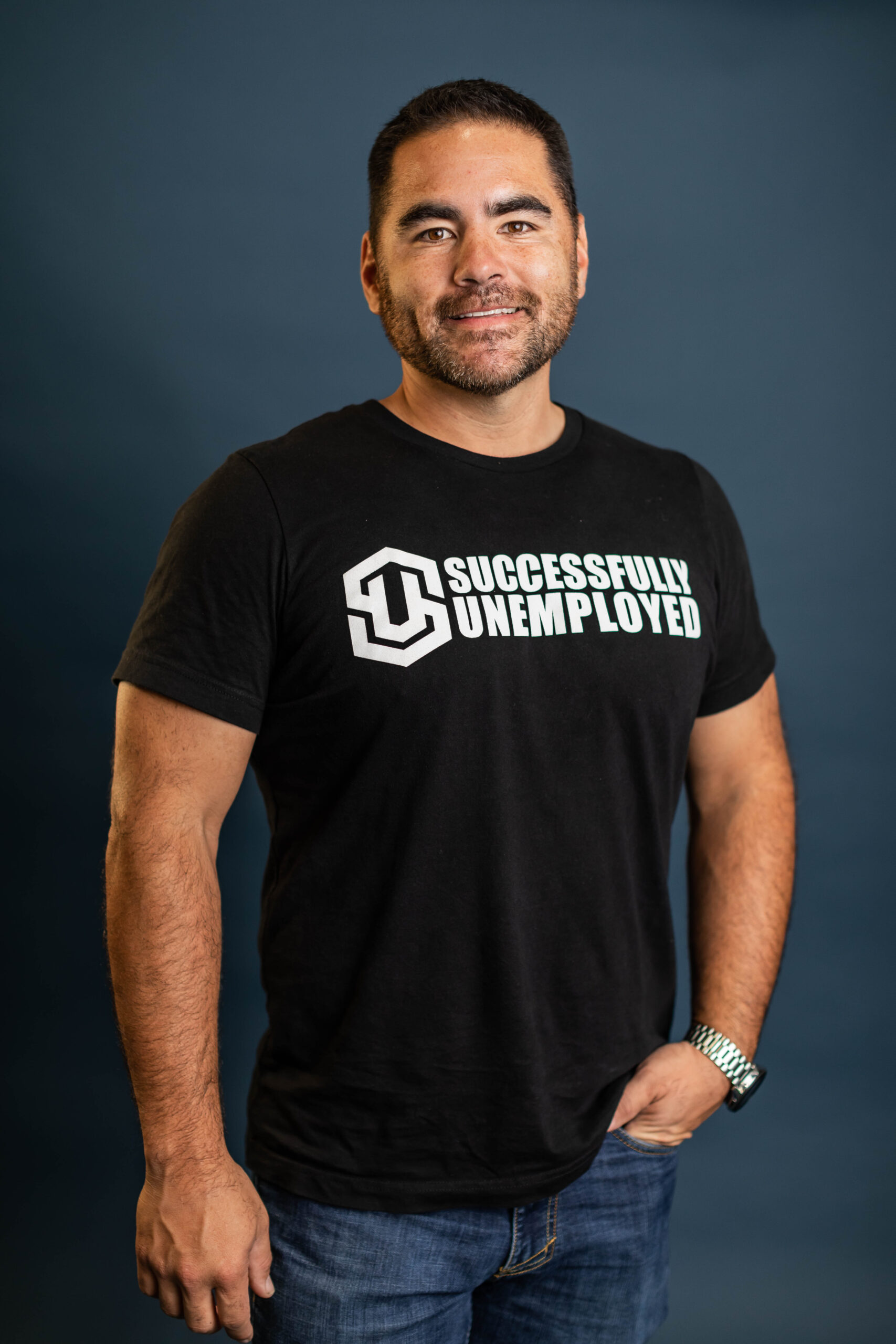
Dustin Heiner is a real estate investing expert and the founder of MasterPassiveIncome.com He started his real estate journey in 2006, and now he is making over $8000 a month. With Master Passive Income, Dustin is on a mission to teach as many people as possible the step-by-step process to investing in real estate by building a business first and then buying the property. He also offers free courses to people who want to quit their jobs and aim to replace their income with passive income from rental properties. He is a true lover of podcasts and runs a YouTube channel, ‘Master Passive Income.’